
REAR-END AWARENESS:
Why it matters and how to build it.

Rear-end awareness is an often-overlooked component of a dog’s physical and mental coordination. Simply put, it refers to a dog’s understanding and control of its hindquarters. While front-end movement is more instinctual and consciously done—think pawing, turning the head, or making eye contact—the back end tends to trail behind with less active engagement. This imbalance can affect everything from obedience and agility performance to long-term joint health.
Many dogs, especially young, large-breed, or very energetic ones, lack control of their hind legs. They may bump into things, slip on turns, or struggle to back up or pivot. Teaching your dog to engage their hind end improves coordination, balance, and strength; helps prevent injury; builds confidence; and enhances performance in sports like agility, obedience, or disc.
Teaching your dog to engage their hind end improves coordination, balance, and strength.
Easy At-Home Exercises
Here are a few simple exercises you can try at home to build your dog’s rear-end awareness:

Backing Up
How to do it:
With your dog standing in front of you, take a small step towards them and encourage them to take a step back with your body pressure. You can create a chute out of sturdy household objects, such as chairs, to help keep your dog travelling straight, and add a cue like “back,” marking and rewarding at their chest even one or two steps initially.
Why it helps:
This teaches your dog to think about where their back feet are going and to move them intentionally.
Rear End Pivot
How to do it:
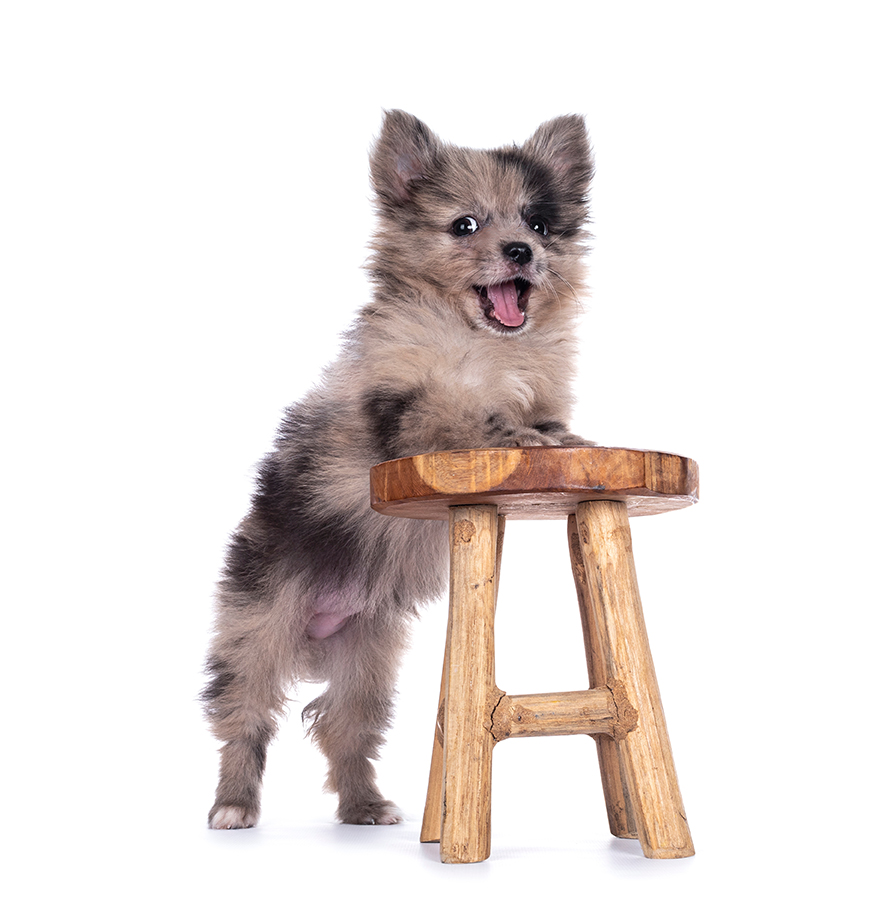
Have your dog place their front paws on a low object like a sturdy book or step stool. Then, lure their head in a circle slowly with a treat so they move their back legs around the object.
Why it helps:
Great for building both hind leg awareness and strength,especially in tight turns.

Cavaletti Poles or Ladder Walks
How to do it:
Lay broomsticks or PVC pipes on the ground spaced evenly apart (or use cavaletti poles or a dog agility ladder). Walk your dog slowly through the setup, pausing to place a treat just ahead of them between every step or two at first to encourage your dog to move thoughtfully. You can leash your dog at first if they are too excited.
Why it helps:
Your dog has to lift and place each paw without touching the obstacles, increasing body awareness and coordination in the hind end.
Touch Targeting with Rear Paws
How to do it:
Use a mat or target pad and reward your dog when they step onto it with their back feet. This may take shaping or capturing, but it’s a great challenge once they start getting the idea. Once your dog is readily offering to back up and step onto the target you can gradually increase their starting point away from the mat.
Why it helps:
Encourages your dog to independently move and place their rear legs with precision.

Final Thoughts
Rear-end awareness isn’t just for sport dogs or canine athletes—it’s valuable for all dogs. A few minutes a week of focused practice can improve your dog’s confidence and ability to move with intention. Plus, it’s a fun way to build your bond and engage their brain and body in a new way. With consistency and patience, your dog will soon become much more aware of what’s going on behind them—and that’s a win from nose to tail!


