
GOLDEN YEARS
Tips for the Senior Dogs Health and Happiness
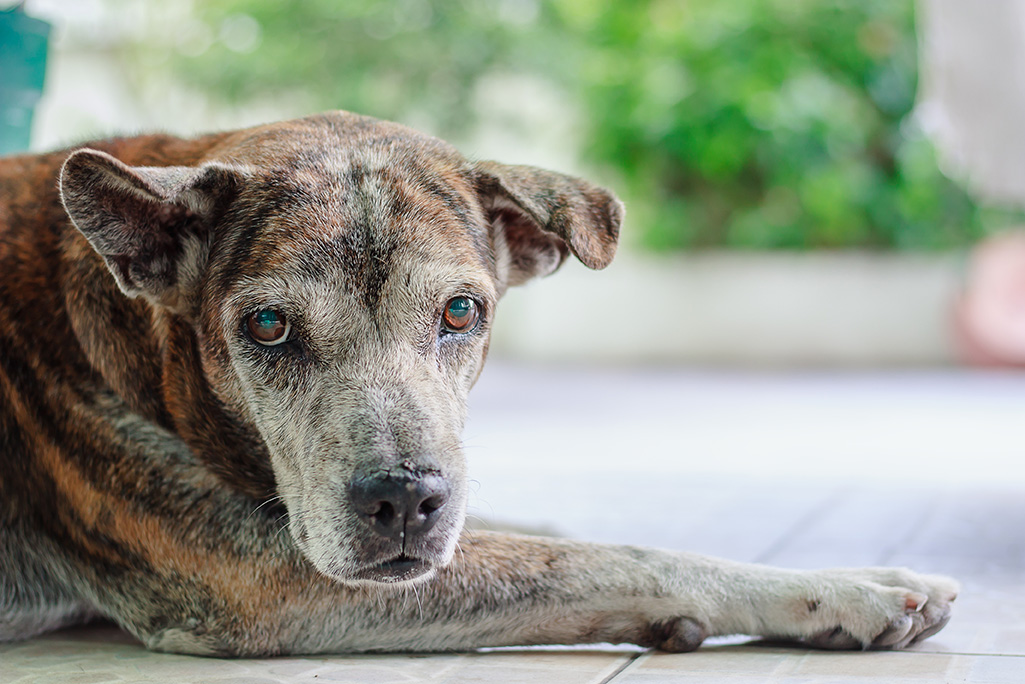
When it comes to senior dogs, it is important to remember that age is not a disease. As their caretakers, we need to be mindful of normal changes in their behaviour compared to those that may indicate pain, which should be addressed with the help of your dog’s veterinarian. We can continue looking for ways to keep their lives enriched throughout their golden years by providing sensory-based and other, gentler activities to help stimulate their minds and keep them moving safely.
WHERE TO BEGIN
- Provide a nonslip surface for your senior dog to navigate.
- Skip any scenarios that could create conflict or danger around treats or toys. (Resource guarding or consumers of non-food items.)
- Keep things spontaneous and fun! Always end activities with your dog wanting more! (Don’t let them get too tired, sore, or bored.)
If you have multiple pets, you may want to manage them separately during these sessions.
INTERACTIVE FOOD AND TOYS
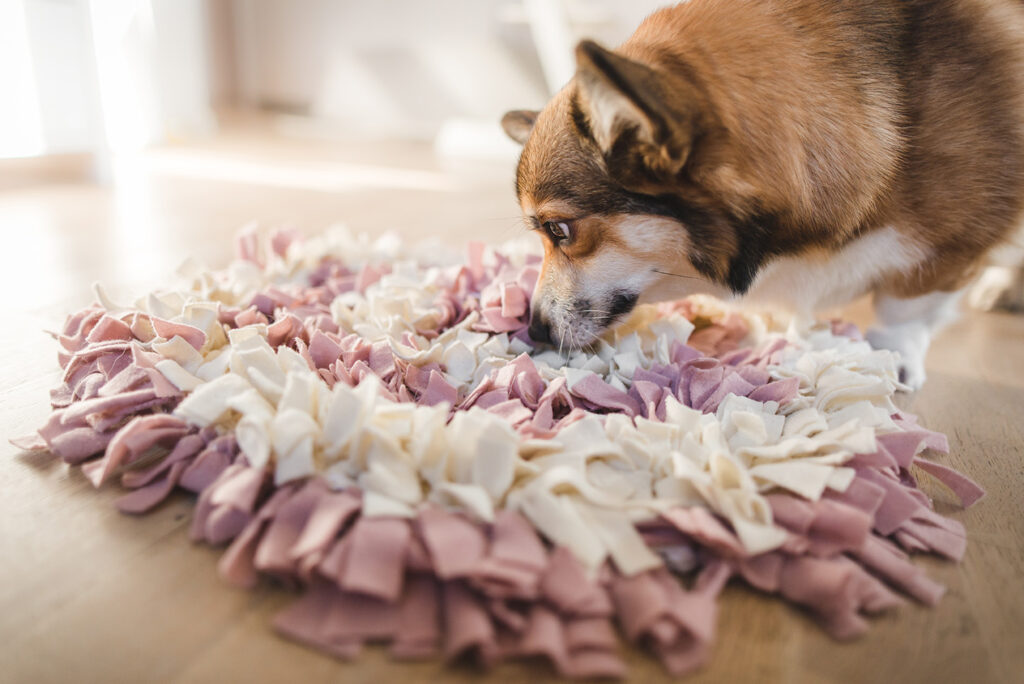
From snuffle mats to various treat dispensing toys and licky mats, either store-bought or homemade, there are many options to make meals and snack times more interesting for your senior dog. Even something as simple as putting your dog’s dinner in a muffin tin (with or without tennis balls on top), in cardboard boxes or tubes (open or closed), or rolling treats up in a towel can all provide mental and physical stimulation. Scattering kibble or hiding treats around the house or yard can also be a fun challenge. Just be sure to adjust your dog’s regular rations if using treats to avoid unwanted weight gain. If your dog seems to be losing interest in food, or if they’ve begun to unexpectedly gain or lose weight, be sure to talk with your veterinarian about potential health issues that may be the cause.
SNIFF WALKS
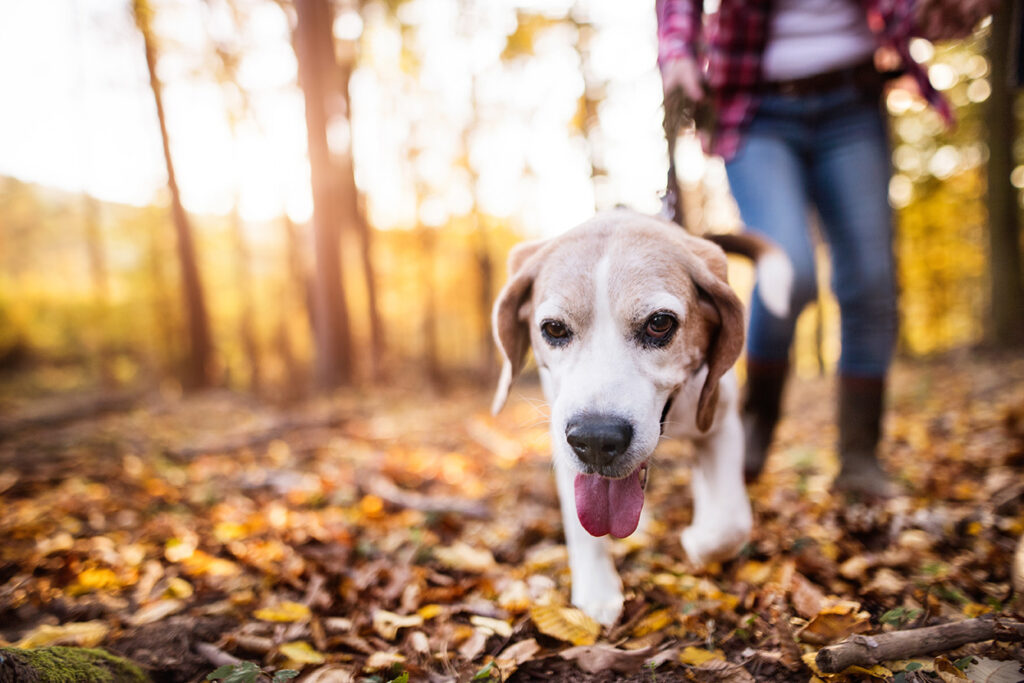
Dogs process much of their environment through their incredible sense of smell. Even though their senses may dull with age, and they may not be able to wander as far as they used to, providing opportunities to sniff out new things away from or around the home can help keep life interesting for a senior dog. This may look like spending time making walks less about “doing business,” or just getting from point A to B. Find novel safe spaces to let your dog explore off-leash or on a long line. If walks are no longer in the cards, you might consider a stroller or wagon for your dog to get around in, or bring some different items home now and then for them to check out!
MODIFIED TRICKS AND GAMES
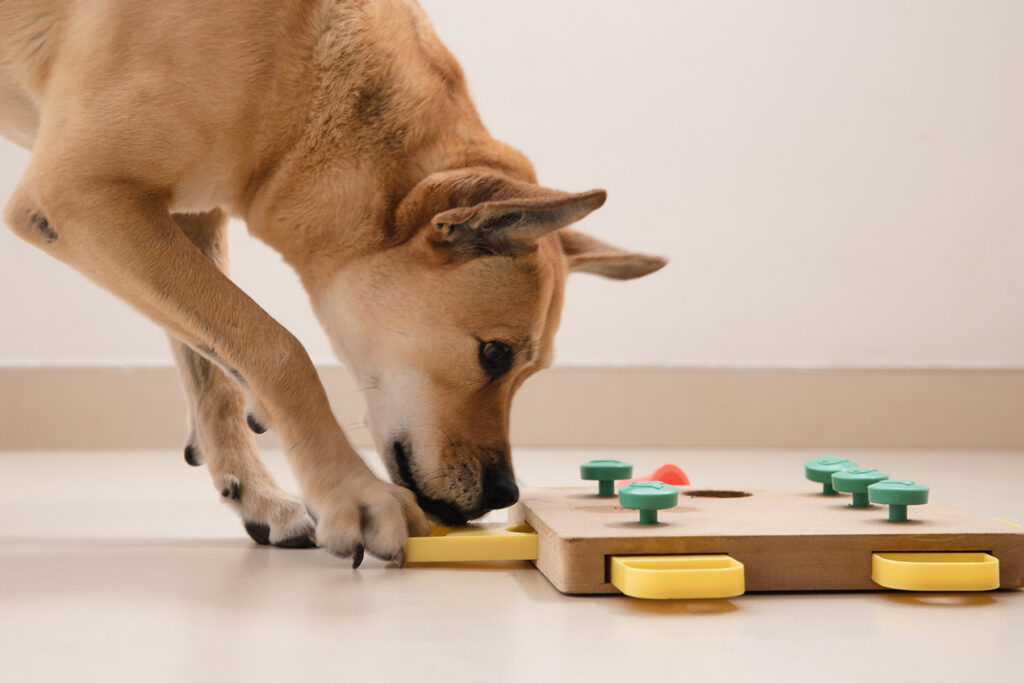
Making fetch, tug, or various tricks less intense and easier on a senior dog’s body can help keep them active without injuring themselves. Being held back or put in a stay so your dog isn’t haphazardly chasing a thrown toy in motion, or training your dog to go out around a cone before returning to a toy to encourage more thoughtful movement are good examples of fetch alternatives. Tricks like bow, controlled spins, shake a paw, and paws up can double as fitness exercises, but repetitions of any activity should be limited and may not be appropriate for all senior dogs. Even if you haven’t noticed any soreness or limping, consulting with a veterinary rehab professional can provide personalized information on stretches and exercises that are appropriate for your dog’s body, not to mention various modalities or medications that might help keep your dog more physically comfortable over time.


