
Impulse Control
Harnessing your dog’s instincts in a positive way.
Most of the things we teach our dogs to live peacefully in our homes go against their genetics. Although some breeds may do less of some behaviors and more of others, genetically all dogs bark, chew, jump, dig, chase, run and bite. They don’t naturally stay still, recall, ignore distractions, focus for long stretches, get along with everyone, stay by themselves for long hours or walk on leashes. Owning a dog requires a fair amount of training to help them live successful domestic lives. On one side of the coin, we need to teach them boundaries and skills to fit into our world. On the other, it’s important to give them safe outlets for those genetics too. Let’s take a look at both sides of that coin.
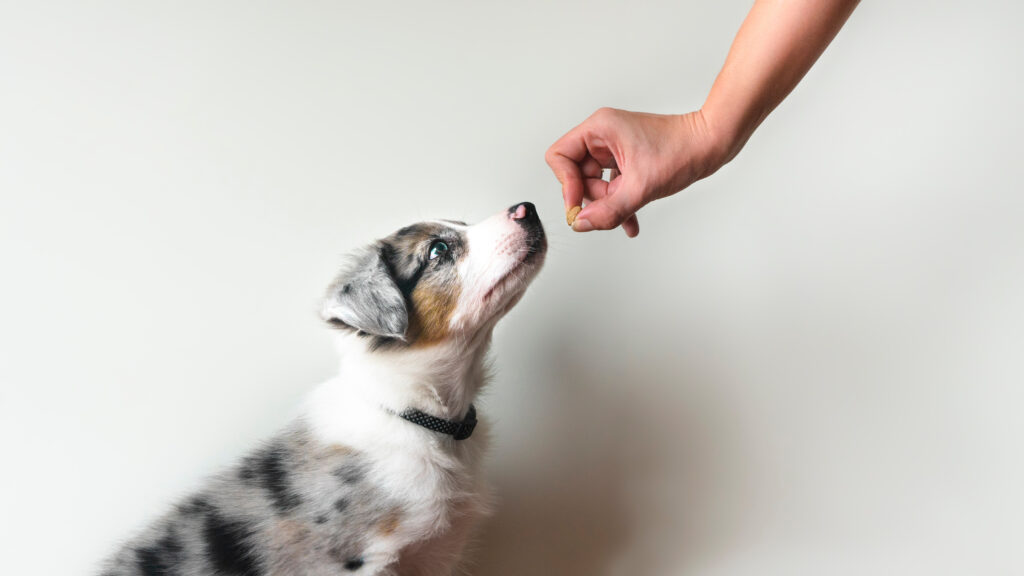
The Root of Domestic Skills: Impulse Control
Most of that training involves Impulse Control, or simply put, training something that’s opposite to genetics. All of us move forward in action to reach the things we want. If we weren’t designed this way we wouldn’t eat, enter relationships or continue our species. The same goes for dogs.
Our behaviour is shaped by our history of learning as well as our environment. In humans, for example, when we’re at a restaurant, we understand the food comes to us, so there’s no need for us to go hunt it down in the kitchen -unless of course it’s taking a really long time to get to the table. At home, we go get food ourselves. Over many repetitions, we can distinguish context of similar events. We can use the same learning theories with our dogs.
When we specifically focus on impulse control,
we can think of it like teaching our learner to:
a) resist temptation
b) to be patient in the face of a temptation
c) that the environmental context changes the usual rules
Let’s Train Some Impulse Control!
To start we focus on the behaviours we want our dogs to continue, while managing the behaviours we want to decrease. I like to train this as an alternate behaviour to the more natural version. By focusing on the wanted behaviour, we can create new pathways in the dog’s brain, while reducing the need for punishment. At its root, obedience is a set of impulse control skills that help dogs fit into our worlds, allowing more freedom within it!
Some examples:
1) Learning to sit before receiving treats.
The alternate behaviour of sitting is trained, while genetically the dog would typically be pushier in accessing the food.
2) Waiting to be released out the door, to not run into traffic.
The alternate behavior of staying still is trained, while genetically the dog would typically move forward to access the freedom.
3) Learning to keep feet on the floor, to not jump on people.
The alternate behaviour of keeping feet on the floor is trained, while genetically a people-loving dog might typically move to a more animated greeting.
Enrichment
Teaching our dog impulse control is only one piece of the dog training puzzle. While general manners and obedience will take us a long way, it also can make life relatively boring. Genetically we have an animal who likes to run, dig, chew, chase, search, and play. Basic impulse control makes them easier to live with, but it doesn’t provide much fun. All work and no play is not a great way to live -whether you’re a human or a dog. Alongside our training, our dogs need opportunities to be dogs!
This is broadly called Enrichment. We should be including several different types of enrichment throughout the week, to satisfy various instincts. While some dogs may be best with a routine walk through the same route most days, it’s a bit like eating the same meal every day. At some point it’s bound to be boring! Variety is the spice of life.
Enrichment Activities
Walking: Taking a walk in different areas, around different distractions.
Sniffing Games: Stopping to sniff, or toss a handful of cookies or kibble into an area to sniff out.
Play a Favorite Old Game: Hide and Seek? Fetch?
Learn Something New: Expand your skills. More difficult stay? Learn a new trick!
High Octane Game: Flirt pole, 2 toy games, or tugging.
Chewing: Give a variety of safe chew options and rotate them for novelty.
New Environment: If you tend to do the same walk most days, try tossing in some extra pieces to spice it up!
Stop to Sniff: Find some green space as you go, allowing your dog a few minutes to check the pee-mail.
Playful Obedience: Layer in sits, downs, stays, recalls and other skills. Reward at least some!
Tug: Bring a favourite tug toy and play tug once or twice on your own.
Watch the World: Hang out on a bench and watch the world go by for a few minutes.
Environmental Playing: Use things in your environment to play on. Think of it like K9 Parkour!
Trick for Treat: Every block or two, do a trick! Mix them up.
Structured Enrichment: Dog Sports
If your schedule allows for more enrichment opportunities for your dog, you can look into local classes and dog sport groups. In Regina, we have the following canine activities available!
• Agility
• Barn Hunt
• Carting
• Rally Obedience
• Disc Dog
• Flyball
• Nosework
• Retriever Training
• Scent Hurdle
• Trick Training
• Weight Pull
Does your dog LOVE certain behaviours that may not always be appropriate?
Giving them a context where that behavior is allowable can be a great balance between your needs and theirs.
Outlets for Different Instincts
Barking: Teach a quiet bark or have a time and place where barking is allowed and encouraged.
Jumping: Jump on different things when asked. Structured Dog Sports like Agility, Flyball or K9 Parkour.
Chewing: Rotate a box of 3-4 toys every day or two for novelty. Stuff and freeze food toys like Kongs or offer Gorilla Chews and scented toys.
Digging: Have a special digging spot. If you want to deter digging try long line exercise (more running should decrease digging).
Running: Long line runs and running beside a bike. Structured dog sports like Agility, Lure Coursing, Draft Dog (Pulling Carts) or searching activities.
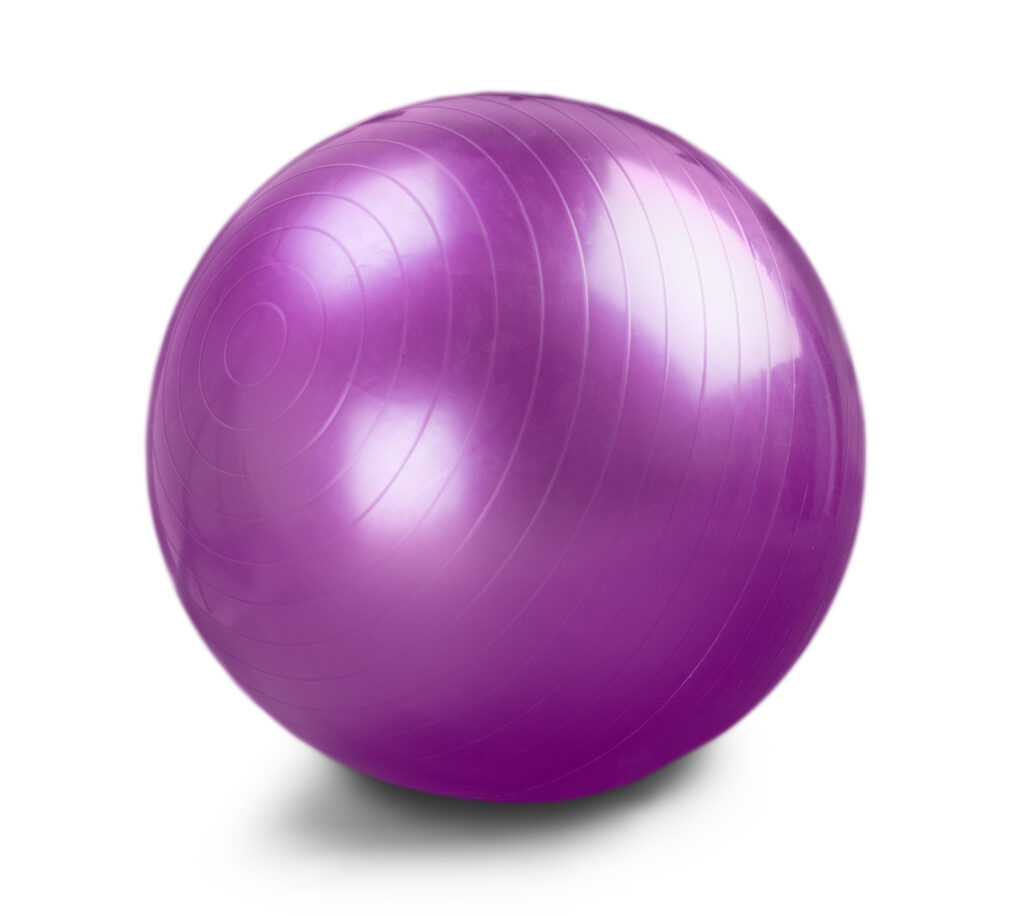
Chasing: Herd a yoga ball or chase the hose (for brief periods only). Play with a Flirt Pole, multi-toy play or dog sports like Agility, Lure Coursing and Barn Hunt.
Biting: *Please seek help from a personal trainer if you do not know why biting is occurring, to ensure any enrichment activity is a good idea for your individual situation.
Two-toy work, obedience with a toy reward, a flirt pole or a tethered tug tied to a tree or other stable structure.
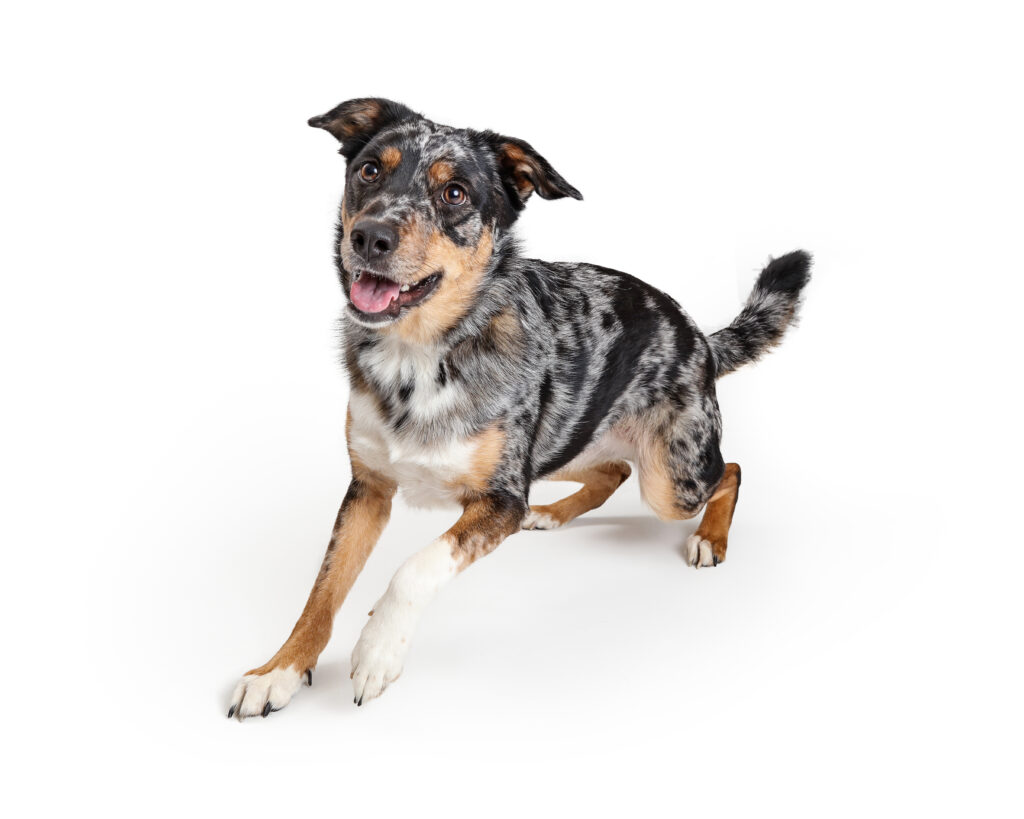
Remember, owning a dog is a big responsibility! We need to teach them to live in our world, while fulfilling their instincts as best as possible. Relationships are give and take and as we journey through our relationships with our four legged family members, we need to focus in on balancing our needs and theirs. Your team will only benefit if both sides of the leash are taken care of.
Emily Garland, CPDT‑KA, MFA
Trainer and Behavioural Specialist


