
K9 Body Language: Learning to speak ‘dog’.
By Mary-Lou Halliday
I have always been an observer. I was shy and quiet as a kid, so I would just sit and watch, and analyze people and situations. Little did I know this would turn into a useful skill I would later utilize in my dog training career; By simply observing I can tell a lot about a dog in just a few seconds, for me it is an innate ability and the tool I use most in dog training. Reading dogs.
Dogs are non-verbal, sure they growl and bark but they communicate primarily through body language. Sometimes the signs are very subtle and sometimes they are very obvious, but dogs are always communicating. If we do not know how to speak their language, we can miss clear
communication and sometimes this can end up in a bad situation that could have been prevented.
Just like people, dogs come with all types of personalities or temperaments; happy–go–lucky, fearful, fear biter, shy, hyper, reactive, or aggressive. You could have two dogs from the same litter and have two very different temperaments.
Dogs who are fearful and shy may end up becoming reactive as a way to protect themselves, simply because their owners missed their cues and put them in a situation that caused them to feel the need to react. Reactivity is just your dog reacting to a situation usually out of fear, but the reaction is most often a very undesired behaviour such as barking, lunging or sometimes even biting. People are then surprised by their dog’s poor reaction “He’s never done that before!” I don’t’ know why that happened?” Your dog was sending loud and clear signals to communicate their discomfort and
because you missed them – they did the only thing they could to feel safe – react defensively; barking, lunging, or biting.
Every dog owner should learn to read their dog’s body language so they can make sure they understand this communication and are doing right by their dog. A fearful dog does not want to go to the crowded public event, or to the dog park. A hyper dog should also not go to these places until you have control over them and do things to help them reduce their hyper aroused state (mental stimulation is better than physical exercise for easily aroused or anxious dogs). A happy–go-lucky dog could go most places but you still need to look for signs it may be uneasy about something. An aggressive or reactive dog needs to be properly exposed to safe environments, and you must be able to read your dog and prevent it from reaching its threshold; the trigger point at which he sees something and has no reaction vs. the point where he does react. An example would be how close another dog has to be before your dog will react to it.
Reading a dog’s body language allows the dog to be heard. We can then keep the dog feeling safe, prevent incidents from happening, and allows our dog to trust us – their handler – to have their back.
OBVIOUS SIGNS
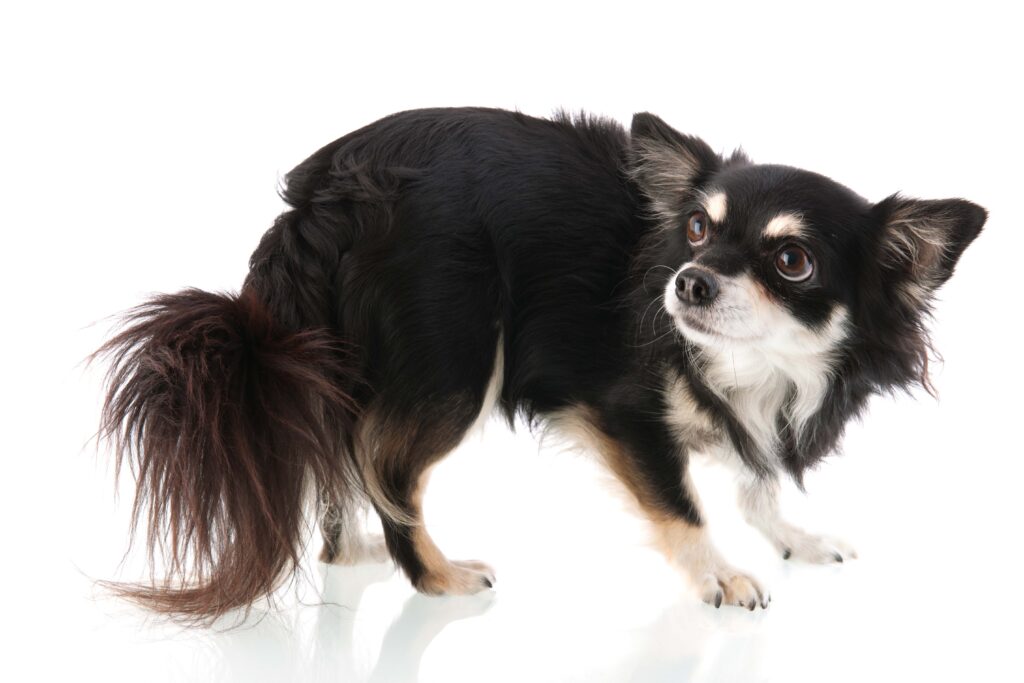
Tail
Relaxed = Calm
Tucked = Fear
High or Erect = Aroused/excited
Wagging = Happy/frustrated/overstimulated
Eyes
Relaxed/Blinking = Calm
Starring = Manipulation or Dominance
Whale eye = Tension
Furrowed Brow = Nervous/tension

Body Posture
Cowering = Fear
Upright = Alert
Forward lean = Fight/launch/lunge (rigid)
Bow = Play invitation

Ears
Erect = Alert
Down = Relaxed
Pressed Back = Fear/uncertainty

Mouth
Open = Relaxed
Closed/Tense = Displeasure
Lip Licking =Stress

SUBTLE SIGNS
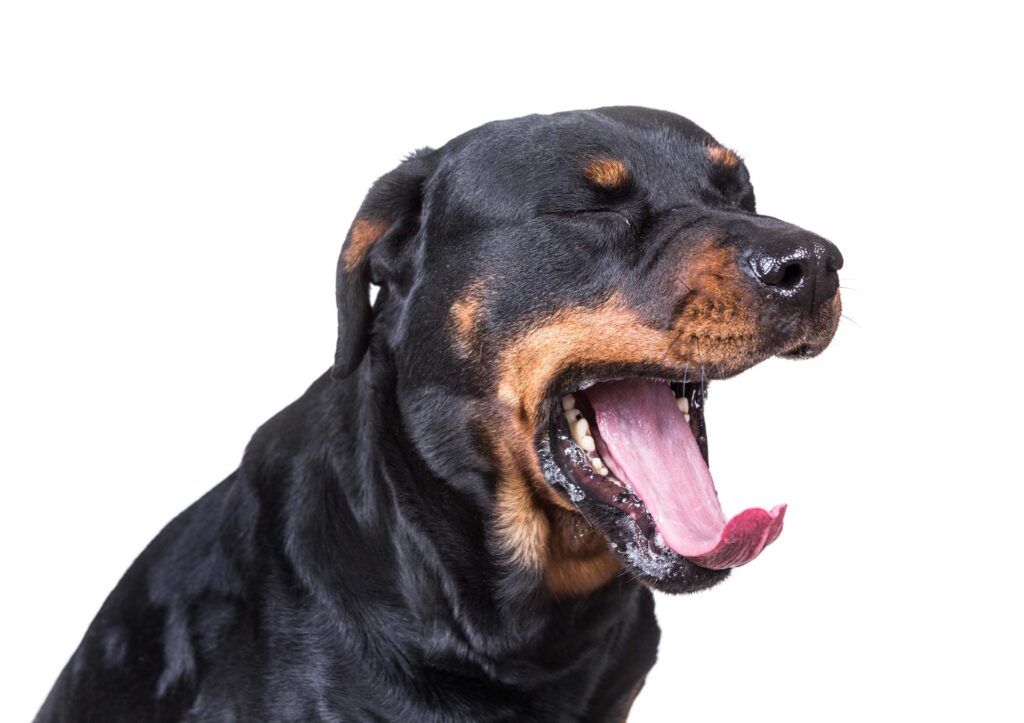
Yawn
Tired or stress yawn – a stress yawn is deeper and bigger than a simple yawn from being tired, it is a way for the dog to relieve stress.
Sniffing
Suddenly sniffing when playing with another dog can be a way to deter or de-escalate play.

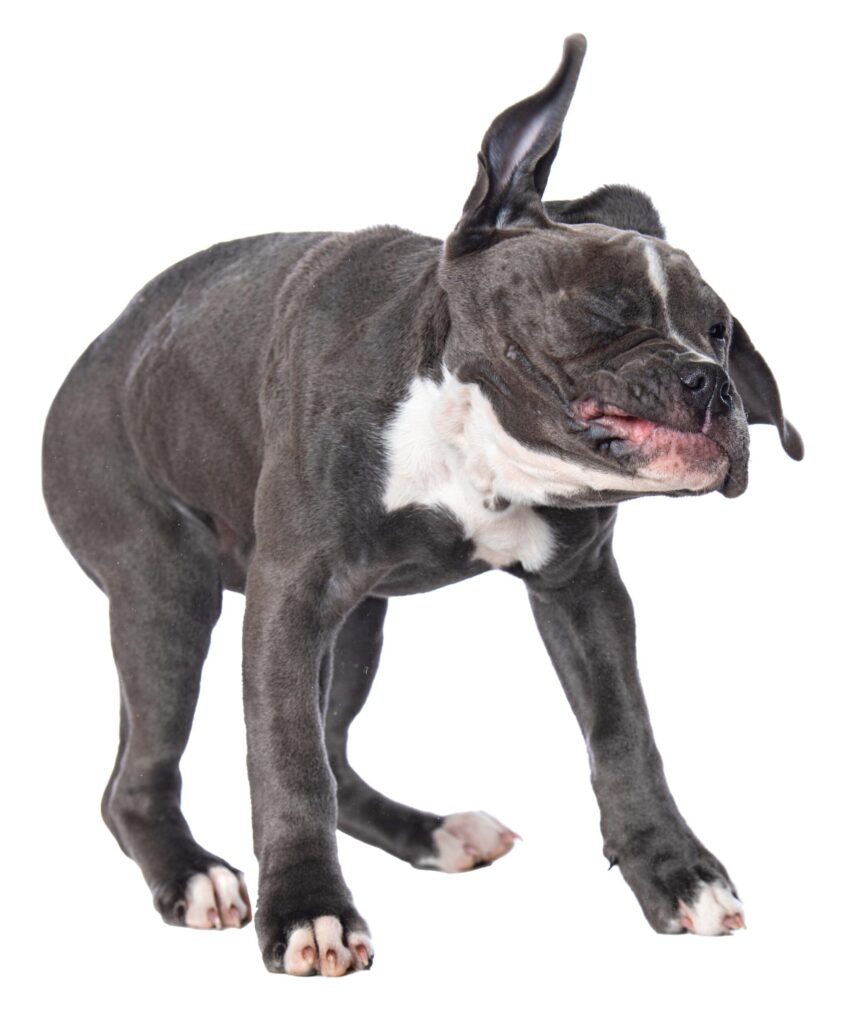
Shake Off
Dogs will often shake their bodies – similar to shaking off excess water, when they have been in a stressful or overstimulating situation. The shake off resets the dog’s amygdala and allows
them to get back to a relaxed state.
Leg Lift / Sweaty Paws
The ‘insecurity paw’, when a dog is uncomfortable they will often lift a paw, similar to a person who may put their hand to their mouth or shrink their bodies when they are uncomfortable.
Sweaty paws are not easy to spot on grass or carpet, but dog’s sweat through their paw pads, so if they are stressed or anxious, they often sweat.
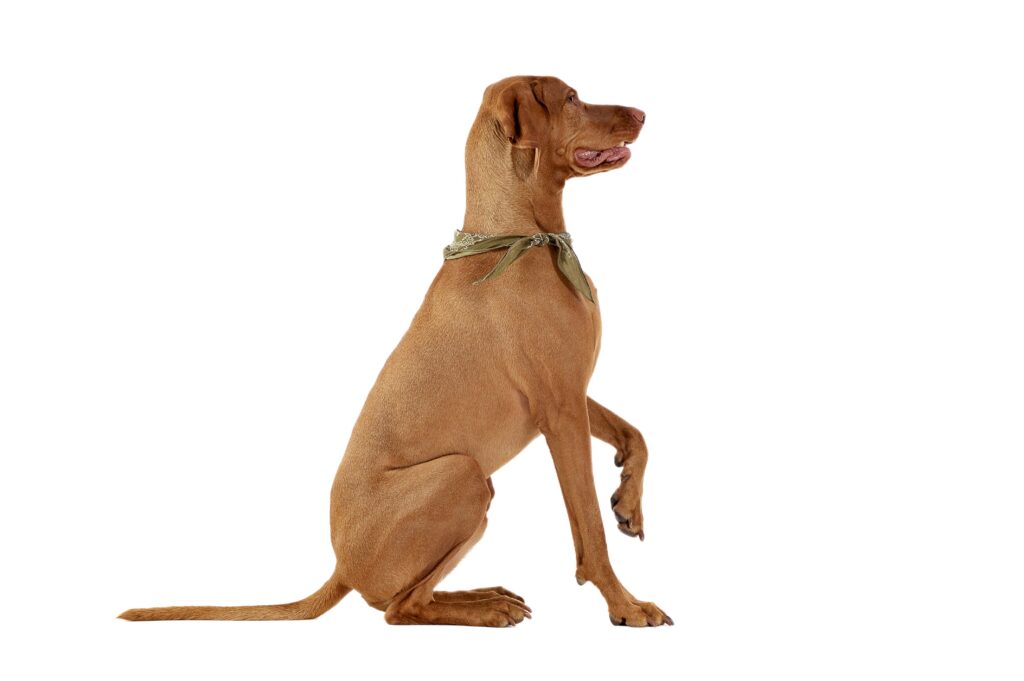
Look at the entire body to help identify the emotion and state of mind.
There are variations to some of these body language cues and there are many more you can pick up on. The key is to watch and observe your dog and get to know their cues, so you can successfully help your dog deal with or remove them from a situation when they are feeling uncomfortable.
Dogs are emotional beings but their only way to indicate these emotions is to show us. Take a few moments over the next few days and watch your dog’s body while they are doing different activities – playing with toys or other dogs, on walks; while passing people, dogs, traffic, when a family member arrives home, etc., and see if you can tell what emotions your dog is displaying through their bod language.
Mary-Lou Halliday | Certified Master Trainer | Owner of Aloha K9 Training


