
Back to Basics
How Dogs Learn
Understanding how dogs learn is the key to effective training. While every dog is unique, the science behind their learning is surprisingly consistent — and wonderfully simple once you learn to see the patterns.
Dogs learn through forming associations. They aren’t motivated by “right” or “wrong”; they’re motivated by outcomes that feel safe and rewarding.
At the heart of canine learning is association — connecting an action, cue, or event with a consequence. Their brains are wired for pattern recognition, which is why consistency matters more than complexity. When cues, rewards, and expectations stay predictable, dogs learn quicker and will become more confident.
Dogs are lifelong social learners, constantly exploring, observing, and adjusting based on what works for them. Positive reinforcement builds on this by rewarding desirable behaviors, making learning both effective and enjoyable.
Whether you’re teaching manners, tricks, or cooperative care skills, remembering that dogs learn through clear communication, consistent patterns, and reward‑based consequences will transform the way you train — and deepen your relationship along the way.

KEY CONCEPTS
CAUSE & EFFECT
Cause‑and‑effect is one of the clearest ways to understand how dogs learn. Dogs don’t understand right or wrong—they understand what works. They repeat behaviours that cause good outcomes and avoid behaviours that cause unpleasant ones.
Teaching a Sit
Cause: The dog puts its bum on the ground
Effect: The dog immediately receives a treat and praise.
The dog learns:
“When I sit, good things happen.”
Sitting becomes more frequent because the effect (reward) reinforces the cause (the behaviour).
ASSOCIATION
Association is the backbone of how dogs understand the world. They constantly link one thing with another, even when we don’t realize it.
Leash = Walk
Every time you pick up the leash, you take your dog for a walk. Eventually, just touching the leash or even walking toward the hook where it hangs can trigger excitement.
Association formed:
Leash = Walk = Fun
The dog learns:
“When the leash appears, we’re going for a walk.”
Effective training is about helping dogs succeed through patterns they can trust and outcomes they enjoy.
CONSISTENCY
Consistency is one of the quiet superpowers in dog training. Dogs thrive when the rules, cues, and Consequences stay the same.
Pulling on the leash

(Be Consistent)
Every time the dog pulls, you stop walking. Every time the leash becomes loose, you move forward again. You don’t “sometimes” let pulling slide because you’re in a hurry.
The dog learns:
“Pulling makes the walk stop. Loose leash makes the walk continue.”
The pattern is predictable, so the dog adjusts faster.
If the rule changes depending on the day, the person, or the mood, they can’t figure out what behaviour actually works. Consistency removes the guesswork.
OUTCOMES
A dog “responding to an outcome” is the basis of operant conditioning. The dog tries a behaviour, something happens, and that outcome shapes what the dog does next.
Sitting Makes the Door Open

The dog wants to go outside. It jumps at the door, scratches, whines—none of those behaviours make the door open.
Eventually, the dog sits. When the dog sits you immediately open the door.
The dog learns:
“When I sat, the door opened.”
The behaviour strengthens because the outcome was rewarding.
Dogs don’t reason—they test behaviours and pay attention to what each one gets them. The outcome tells them whether to repeat or avoid the behaviour.
POSITIVE REINFORCEMENT
Positive reinforcement is all about adding something the dog likes to increase the chance they repeat a behaviour.
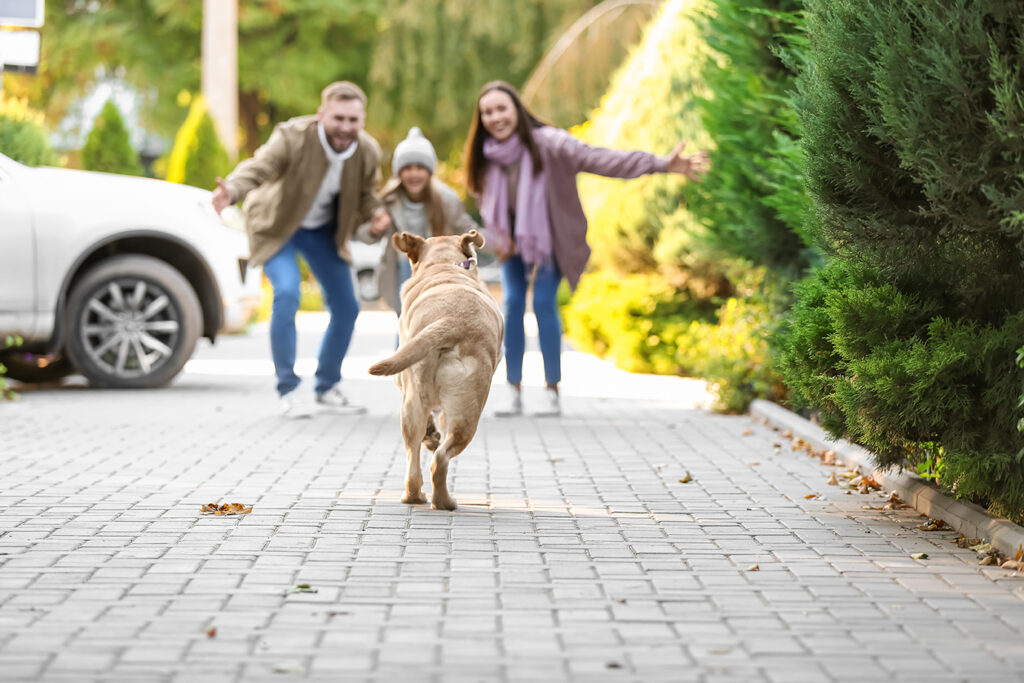
Recall
(Come When Called)
You say, “Come!” and the dog walks toward you. You immediately give a treat, praise, or a quick game.
The dog learns:
“When I go to my person when they say ‘come,’ good things happen.”
The dog becomes faster and more reliable at coming because the reward strengthens the behaviour, and the dog repeats the behaviour that leads to enjoyable outcomes.
All of these principles work together to create clear communication and predictable learning for dogs. When behaviours reliably lead to rewarding results, when cues and routines stay consistent, and when everyday experiences form positive associations, dogs will quickly understand what works and feel confident offering those behaviours again. Effective training is about helping dogs succeed through patterns they can trust and outcomes they enjoy.
Associated Links
Pet Training Clicker with Wrist Strap – Dog Training Clickers
Treat&Train – Remote Treat Dispensing Dog Training System, Positive Reinforcement
Crumps’ Naturals Mini Trainers Freeze Dried Beef Liver (1 Pack),, 1.9OZ/ 55G
*As an Amazon Associate, a small commission is earned from qualifying purchases.


